Housing & Planning
Want to Make the Bathroom Safer for an Older Parent? Start With a Walk-Through
The National Institute on Aging recommends checking wet surfaces, grab bars, and nighttime lighting in bathrooms. Before making a permanent change, homeowners in Garden Grove, Westminster, or Fountain Valley should ask their local Building Division whether the specific work needs a permit.
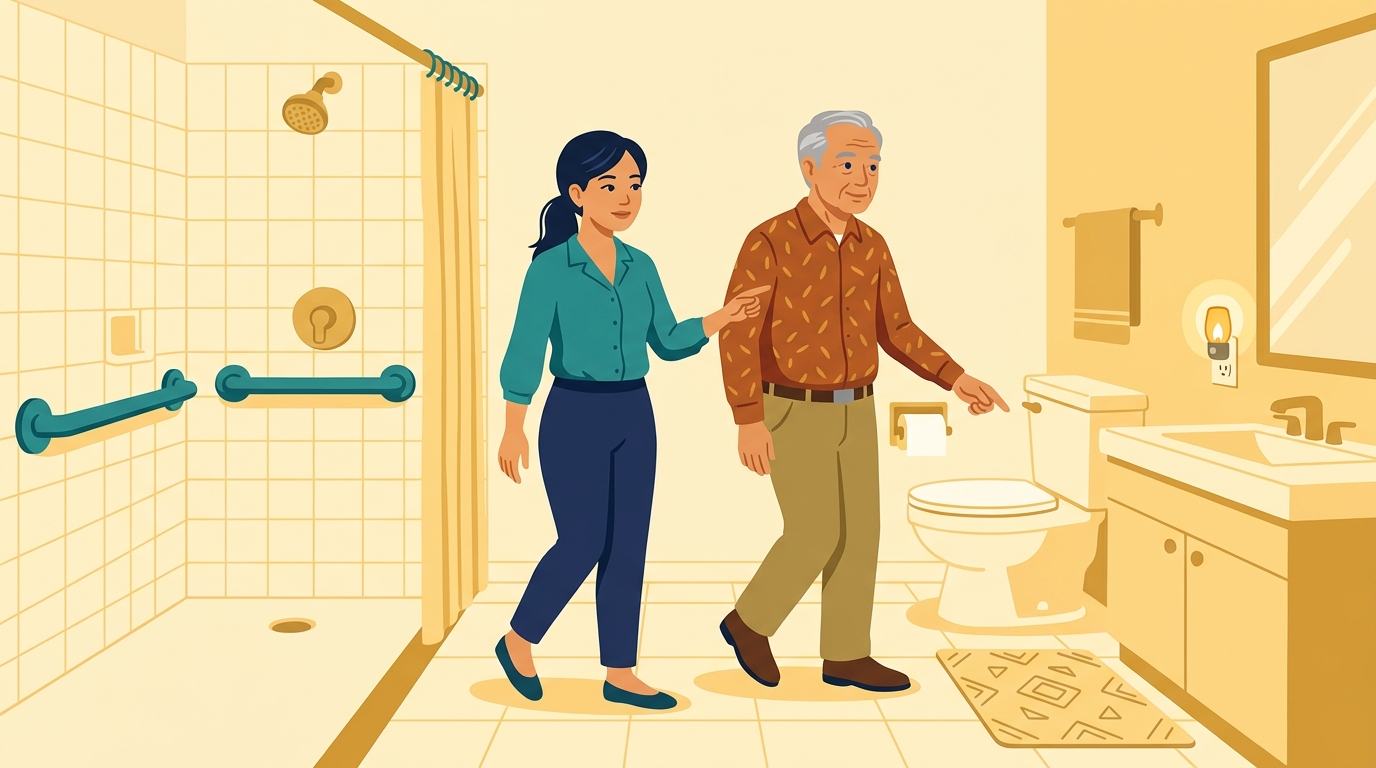
- Start with a walk-through. NIA recommends looking at wet floors, walking paths, grab bars, and lighting in the bathroom. It also recommends keeping paths clear and frequently used items within reach.
- A device does not replace an individual assessment. If a parent has fallen or feels unsteady, ask a doctor or rehabilitation professional. A doctor may refer the person for an in-home safety assessment.
- Check permit rules before permanent work. Permit requirements depend on the location and scope; contact the Building Division before hiring or starting work. CSLB directs homeowners to local building departments because requirements vary by place.
Look before you buy equipment
For an older adult, a wet floor, a high tub edge, or poor nighttime lighting can make moving through a bathroom harder. The National Institute on Aging (NIA) offers room-by-room guidance for checking a home and reducing fall risks.
NIA suggests placing grab bars near the toilet and both inside and outside the tub or shower. It also recommends nonskid mats or strips on surfaces that may get wet. A night light or an automatic light may help someone see when entering the bathroom at night.
These are general suggestions, not an installation plan. A grab bar must be placed appropriately and attached to a secure structure. This article does not explain how to drill, choose load-bearing materials, or set installation height.
Ask your parent what feels difficult
Before making changes, look at the path through the room and ask your parent what worries them most. It could be stepping into the tub, standing up from the toilet, reaching for a towel, or turning on a light at night. Do not ask someone who is weak or unsteady to test a movement that could cause a fall.
NIA also recommends keeping walking areas clear, securing rugs so they do not slip, and keeping frequently used items within reach. If your parent has fallen or avoids activities because of fear of falling, tell a doctor. The doctor may refer the person to an occupational therapist, physical therapist, or nurse for a home-safety assessment.
The CDC’s STEADI program offers fall-prevention materials for older adults, caregivers, and health care professionals. These resources can help families learn about risks; they do not replace an in-home assessment by a professional.
Before hiring someone to make changes
Adding a grab bar, replacing flooring, moving a fixture, or changing plumbing can involve different kinds of work and local requirements. The California Contractors State License Board (CSLB) directs consumers to their local building department because permit rules vary by city and county.
Before signing a contract, ask:
- Does this work need a permit at this address?
- Who will apply for the permit and schedule inspections if the city requires them?
- Where will a grab bar attach, and who will confirm that the mounting point is secure?
- Does the contractor have the license classification needed for the work?
A home in Garden Grove, Westminster, or Fountain Valley must be checked under that city’s requirements. This article does not say that a specific project always needs or is always exempt from a permit.
CSLB has a contractor-license lookup tool. You can search by license number or business name before signing a contract. A license lookup does not guarantee workmanship; it helps confirm license records and public information.
What to remember
Walk through the bathroom with your parent before buying equipment or signing a contract. NIA and CDC provide fall-prevention information; a doctor or rehabilitation professional can assess individual needs. The local Building Division can confirm permit requirements, and the contractor is responsible for the agreed work.
This article is for general information only and is not financial, tax, investment, or legal advice. Please consult a licensed professional before making decisions.
Translation assisted by AI and reviewed by an editor.
nguy cơ té ngã → fall risk
Gia đình có thể xem lại nguy cơ té ngã trong phòng tắm.
bề mặt chống trượt → nonskid surface
Thảm chống trượt có thể dùng ở nơi sàn thường bị ướt.
chuyên viên hoạt động trị liệu → occupational therapist
Chuyên viên hoạt động trị liệu có thể đánh giá an toàn tại nhà.
đánh giá tại nhà → home-safety assessment
Bác sĩ có thể giới thiệu chuyên viên tới đánh giá tại nhà.
giấy phép phù hợp → appropriate license
Chủ nhà có thể tra giấy phép phù hợp của nhà thầu.
kiểm tra công trình → inspection
Hỏi thành phố có cần kiểm tra công trình sau khi sửa không.
🧩 Play Cầu Chữ — the daily word game from Bolsa Bridge, built from vocabulary boxes like this one →
This article is for general information only and is not financial, tax, investment, or legal advice. Please consult a licensed professional before making decisions.
Sources & verification notes · 5 sources
- National Institute on Aging, Preventing Falls at Home: Room by Room. Original language: English. NIA offers bathroom, walking-path, and lighting suggestions and notes that a doctor may refer someone for an in-home assessment. The page says it was reviewed September 12, 2022. https://www.nia.nih.gov/health/falls-and-falls-prevention/preventing-falls-home-room-room
- CDC STEADI, Patient & Caregiver Resources. Original language: English; educational fall-prevention materials for older adults and caregivers. https://www.cdc.gov/steadi/patient-resources/index.html
- California Contractors State License Board, Do I Need a Building Permit for My Project? Original language: English; CSLB says requirements vary locally and directs homeowners to their building department. https://www.cslb.ca.gov/Consumers/Hire_A_Contractor/Building_Permit_Requirements.aspx
- California Contractors State License Board, Check a Contractor License or HIS Registration. Original language: English; lookup tool for license records and some public complaint information. https://www.cslb.ca.gov/OnlineServices/CheckLicenseII/CheckLicense.aspx
- CDC STEADI, About the Initiative. Original language: English; STEADI guides health care providers to screen, assess, and intervene on fall risks. https://www.cdc.gov/steadi/about/index.html