Safety · Scam Alert
Asked to Zelle a deposit before you've seen the room? Three California laws that expose a fake listing in under a minute
In summer 2026, Placentia police reported a spike in fake rental listings on social media, and a Fullerton renter lost a $2,500 deposit on a house they never set foot in. The scam is running nationwide, and Little Saigon's busy room-rental market gives it every reason to stop by.
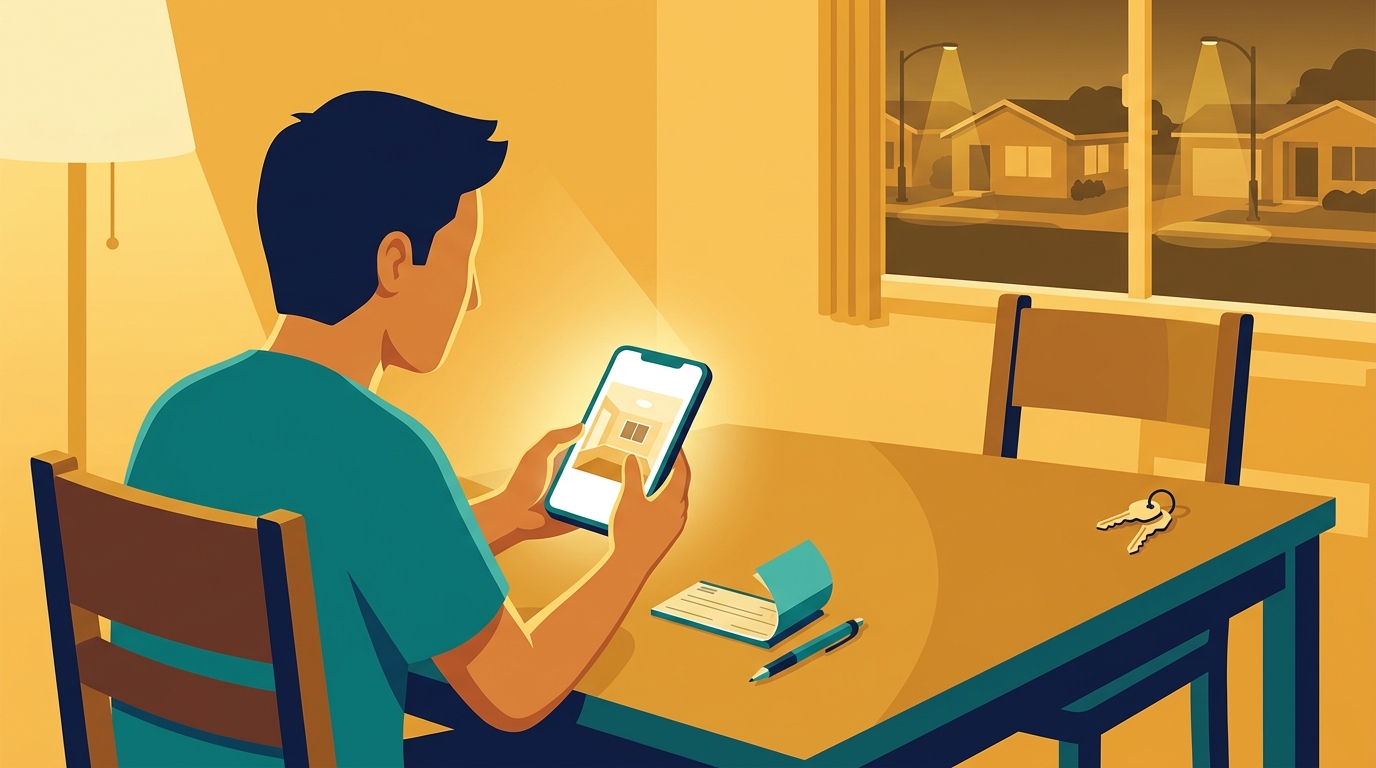
- Haven't seen it in person? Don't send a dime. According to the FTC, being pushed to send a deposit by Zelle, Venmo or Cash App before you can tour the place is the clearest sign of a scam.
- California law is on the renter's side. A deposit can't exceed one month's rent. A landlord can't require cash-only or app-only payment. And you must get a copy of the lease within 15 days.
- Already sent money? Call your bank first, then your city police and ReportFraud.ftc.gov. The sooner you act, the better your odds of getting it back.
What's going on?
Apartment hunting now starts on your phone. People scroll Facebook groups, classified sites, Zillow, even TikTok. Scammers post in exactly those places.
Their listings look real. Nice photos, often lifted from a house that's actually for sale. A price a little below market, just enough to make you anxious. Then the "landlord" says they're out of state, in the hospital, or traveling for work. They can't show the place. But there's a video. And lots of people are asking, so if you want to hold it, send the deposit now.
That's when the money disappears.
The Federal Trade Commission (FTC), the government's consumer-protection agency, has tracked this for years. From 2020 through mid-2025, the FTC received nearly 65,000 reports of rental scams. Losses totaled about $65 million, with a median loss of $1,000 per report. According to the FTC, about half of those cases started with a fake ad on Facebook.
The FBI's numbers are broader and include home-purchase fraud. In 2025, the FBI's Internet Crime Complaint Center (IC3) logged 12,368 real-estate fraud complaints with more than $275 million in losses, up from $174 million the year before.
This article doesn't cover every kind of fake listing. Bolsa Bridge's August 18, 2026 story did that. This one zooms in on the con running hardest right now: the pressure to send a deposit through a payment app before you've seen the place. And it hands you three California laws that scammers never bring up.
How the scam works
Before the laws, look at the con. It usually runs in four steps.
Step 1. A good-looking listing at a soft price. Placentia police say the photos are often pulled from real for-sale listings on the MLS. You look up the address on a map, see a real house, and relax.
Step 2. The "owner" can't meet. They're in another state, in the hospital, dealing with a funeral. Instead you get a walkthrough video or a Google Drive link.
Step 3. A small payment first, then a big one. An "application fee" of a few dozen dollars. Then the deposit or a holding fee. All through Zelle, Venmo, Cash App, sometimes crypto. The reason: "a lot of people are asking about it."
Step 4. They vanish. Or they stall: "the current tenant moves out next week," "we'll refund you." Then your number is blocked.
A few variations are worth knowing. In Riverside, a scammer broke into a vacant house, changed the locks, and showed it to renters as if he owned it. One victim handed over $6,500 in cash across three visits. In New York, a man posing as a broker on Facebook Marketplace toured people through a real apartment he had no right to rent. He collected deposits and first month's rent, then kept pushing back the move-in date. In Miami, a scammer ran showings over FaceTime and sent out fake leases.
Every variation shares one thing: the money goes first, and the keys don't come.
Where it has already happened, and why this neighborhood should pay attention
This isn't far away. In November 2025, the Los Angeles County District Attorney charged a Long Beach woman with 30 counts. According to the Long Beach Post, she posted fake room listings and collected deposits of $1,500 to $4,000 apiece from 14 victims, about $48,000 in all. She later pleaded guilty.
In July 2026, the Los Angeles Times told the story of a Fullerton renter who found a two-bedroom house listed below market. The "owner" sent a video, then pushed for a $75 application fee and a $2,500 deposit by Zelle over a few days. Then silence. An Orange County Sheriff's sergeant told the paper what every detective says: if it sounds too good to be true, it probably is.
That same month, the Placentia Police Department warned that fake rental listings were surging on Facebook Marketplace, TikTok and Instagram.
This scam has already hit Long Beach, Fullerton and Placentia. Odds are high it is running in Westminster, Garden Grove and Fountain Valley too. The reason is simple: our community's room-rental market is busy, and most deals start with a text message.
Three California laws scammers won't mention
Recognizing the con is one thing. Having a tool to call it out on the spot is another. The three laws below are that tool. Real landlords have to follow them. Fake landlords can hardly keep all three.
Law 1: The deposit can't exceed one month's rent
Since July 1, 2024, California Civil Code section 1950.5 caps security deposits. A landlord can't demand more than one month's rent as a deposit, on top of the first month's rent. That's Assembly Bill 12.
There is one narrow exception. A landlord who is an individual, owns no more than two rental properties, and has no more than four units total, may ask for up to two months. The exception doesn't apply if the renter is a service member.
Here's what that looks like: a room rents for $1,200 a month. The deposit is capped at $1,200, or $2,400 if the landlord qualifies as a small landlord. Anyone asking $3,500 "to be safe" is breaking the law. Or isn't the landlord.
Law 2: They can't make you pay only by Zelle or cash
Since January 1, 2025, Civil Code section 1947.3 (Senate Bill 611) has been in effect. It requires landlords to accept rent and deposits by at least one method that is neither cash nor electronic transfer. A check or money order, for example.
In other words, "I only take Zelle" is against California law. A real landlord may prefer Zelle. But when you say you'd like to pay by check, they have to accept it. A scammer can't, because a check carries a name, a bank and a paper trail.
It's the simplest test there is: "Can I pay the deposit by check?" The answer tells you everything.
Law 3: A lease and a receipt are your right
Civil Code section 1962 requires the landlord to give you three things in writing. The name, phone number and address of the manager or whoever collects the rent, plus how rent is to be paid. The landlord must also give you a copy of the lease within 15 days of signing.
Section 1499 gives anyone who pays money the right to a receipt. And when you move out, the landlord has 21 days to return your deposit with an itemized list of any deductions (section 1950.5, subdivision h).
A scammer has no address to write down and no real lease to hand over. All they have is a phone number and a Zelle account.
Five red flags, one rule
The three laws filter out most fake listings. Add the five red flags the FTC and the California Department of Real Estate (DRE) listed in a February 2026 alert, and you're close to scam-proof:
1. The price is well below similar rooms nearby.
2. You're pressured to decide fast: "put the deposit down today or lose it."
3. They only take payment apps, gift cards or crypto.
4. The "owner" is far away and won't show the place in person, only by video.
5. The same address shows up in several listings under different owners' names.
The FTC suggests Googling the landlord's name with the word "scam," and checking public records for the property. In Orange County, owners' names don't appear on the county's online property-tax lookup. The more practical move: insist on meeting at the property itself, and ask to see documents with a name that matches the person in front of you.
The only rule you need: until you've stood in the room and held the lease, don't send money.
Already sent money? Do this now
Prevention is best. But if the money is gone, speed decides what's left.
Sent by Zelle: call the bank that holds your Zelle account right away, not Zelle itself. Zelle says some impostor scams qualify for reimbursement. If you use the standalone Zelle app, call:
Zelle: 1-844-428-8542
Sent by Venmo or Cash App: report it in the app immediately and call the linked bank.
Call your city police (non-emergency line):
Westminster: (714) 548-3212
Garden Grove: (714) 741-5704
Fountain Valley: (714) 593-4483
File federal and state reports: ReportFraud.ftc.gov (FTC) and ic3.gov (FBI). If the scammer claimed to be a real-estate agent, also report to the DRE at dre.ca.gov.
Report the listing to the platform so it's taken down, for the next person's sake.
Bigger than one deposit
Our community's rental market runs on trust and text messages. That's its strength, and it's the gap scammers aim for.
The three laws in this article aren't just for catching fraud. They also protect honest landlords. A landlord who takes a check, hands over a lease and writes a receipt doesn't get wrongly suspected. A renter who asks three questions and gets straight answers can sign with peace of mind.
Who decides what happens next? The person holding the phone, right before they hit send.
tiền cọc → security deposit
Cọc tối đa bằng một tháng tiền thuê. (The deposit is capped at one month's rent.)
chủ nhà → landlord
Chủ nhà thật không ngại nhận check. (A real landlord doesn't mind taking a check.)
hợp đồng thuê → lease, rental agreement
Chưa cầm hợp đồng thuê thì chưa chuyển tiền. (No lease in hand, no money sent.)
biên nhận → receipt
Quý vị có quyền đòi biên nhận. (You have the right to a receipt.)
xem tận nơi → to see a place in person
Đòi gặp tại chính căn nhà và xem tận nơi. (Insist on meeting at the property and seeing it in person.)
giục → to rush or pressure someone
Ai giục chuyển cọc gấp là dấu hiệu lừa đảo. (Anyone rushing you to send a deposit is a red flag.)
bắt bài → to see through a con, to call it out
Ba luật này giúp quý vị bắt bài kẻ gian tại chỗ. (These three laws let you call out the crook on the spot.)
mặt bằng (giá) → the going rate, market price
Giá rẻ hơn hẳn mặt bằng là mồi nhử. (A price well below the going rate is bait.)
🧩 Play Cầu Chữ — the daily word game from Bolsa Bridge, built from vocabulary boxes like this one →
This article is for general information only and is not financial, tax, investment, or legal advice. Please consult a licensed professional before making decisions.
Sources & verification notes · 16 sources
- FTC — "Rental Listing Scams" (updated June 2026): red flags, how to check a listing, where to report. https://consumer.ftc.gov/articles/rental-listing-scams
- FTC Data Spotlight — "Rental scams hit home with $65 million in reported losses" (December 22, 2025): nearly 65,000 reports and about $65 million from January 2020 to June 2025, $1,000 median loss, about half starting on Facebook. https://www.ftc.gov/news-events/data-visualizations/data-spotlight/2025/12/rental-scams-hit-home-65-million-reported-losses
- FBI IC3 — 2025 Internet Crime Report: Real Estate category, 12,368 complaints, $275,110,419 in losses ($173,586,820 in 2024). https://www.ic3.gov/AnnualReport/Reports/2025_IC3Report.pdf
- California Department of Real Estate — Consumer Alert on real-estate scams targeting seniors (February 19, 2026), online rental fraud section. https://dre.ca.gov/Consumers/ConsumerAlerts/ConsumerAlert_202602_TargetedRealEstateScams.html
- California Civil Code section 1950.5 (deposit cap under AB 12, effective July 1, 2024; 21-day refund rule, subdivision h). https://leginfo.legislature.ca.gov/faces/codes_displaySection.xhtml?lawCode=CIV§ionNum=1950.5 · AB 12 (2023): https://leginfo.legislature.ca.gov/faces/billTextClient.xhtml?bill_id=202320240AB12
- California Civil Code section 1947.3 (SB 611, effective January 1, 2025): landlords must accept at least one payment method that is neither cash nor electronic transfer. https://leginfo.legislature.ca.gov/faces/codes_displaySection.xhtml?lawCode=CIV§ionNum=1947.3
- California Civil Code section 1962 (manager disclosure, lease copy within 15 days) and section 1499 (right to a receipt). leginfo.legislature.ca.gov
- Long Beach Post (November 26, 2025) and NBC Los Angeles: the Long Beach case, 14 victims, about $48,000, 30 counts, later a guilty plea. News reports citing the L.A. County District Attorney. https://lbpost.com/news/crime/anne-bergstedt-rental-scam-arrested-charged/ · https://www.nbclosangeles.com/news/local/long-beach-rent-security-deposit-anne-bergstedt/3810532/
- Los Angeles Times (July 31, 2026, syndicated on ArcaMax): the Fullerton case, a $75 application fee and $2,500 deposit by Zelle; Orange County Sheriff's Department comment. News report. https://www.arcamax.com/business/businessnews/s-4265604
- KTLA (July 2026): Placentia Police Department warning on fake rentals on Facebook Marketplace, TikTok and Instagram; photos lifted from the MLS. https://ktla.com/news/california/placentia-rental-scams-social-media-warning/
- Manhattan District Attorney — press release on a guilty plea in a Facebook Marketplace rental scam (July 14, 2026). https://manhattanda.org/d-a-bragg-announces-guilty-plea-in-rental-scam-that-defrauded-multiple-victims-of-thousands-of-dollars/
- Local10 Miami (May 22, 2026): FaceTime showings and fake leases, per the arrest report — allegations. https://www.local10.com/news/local/2026/05/22/miami-man-accused-in-facebook-marketplace-apartment-rental-scam-involving-multiple-victims/
- Raincross Gazette, Riverside (October 16, 2025): locks changed on a vacant home, victim out $6,500. https://www.raincrossgazette.com/rental-scam-targets-riverside-home-victims-out-6-500/
- Zelle — "Report a scam": contact your bank first; phone line for standalone-app users. https://www.zelle.com/support/report-scam
- Police non-emergency numbers, as listed on each city's website on September 15, 2026: Westminster https://www.westminster-ca.gov/departments/police/how-do-i/contact · Garden Grove https://ggcity.org/police · Fountain Valley http://www.fountainvalley.gov/1471/Police-Department
- Bolsa Bridge — "Selling your stuff, renting out a room, tutoring on the side: six signs the person contacting you is a scammer" (August 18, 2026) — background on fake listings and the overpayment scam.
- Safety · Scam AlertSelling your stuff, renting out a room, tutoring on the side: six signs the person contacting you is a scammer
- Small BusinessBuying a nail salon or a restaurant? Five documents to hold before any money changes hands — miss one, and the seller's debts can become yours
- Safety · Scam AlertDebt relief, credit repair, "guaranteed" loans: one question exposes all three — do they want your money before or after the work?