Safety · Scam Alert
Selling your stuff, renting out a room, tutoring on the side: six signs the person contacting you is a scammer
Most people assume only buyers and renters get burned by classified ads — but scammers target the people who post them, too. Learn these six warning signs and you can block most of today's common marketplace cons.
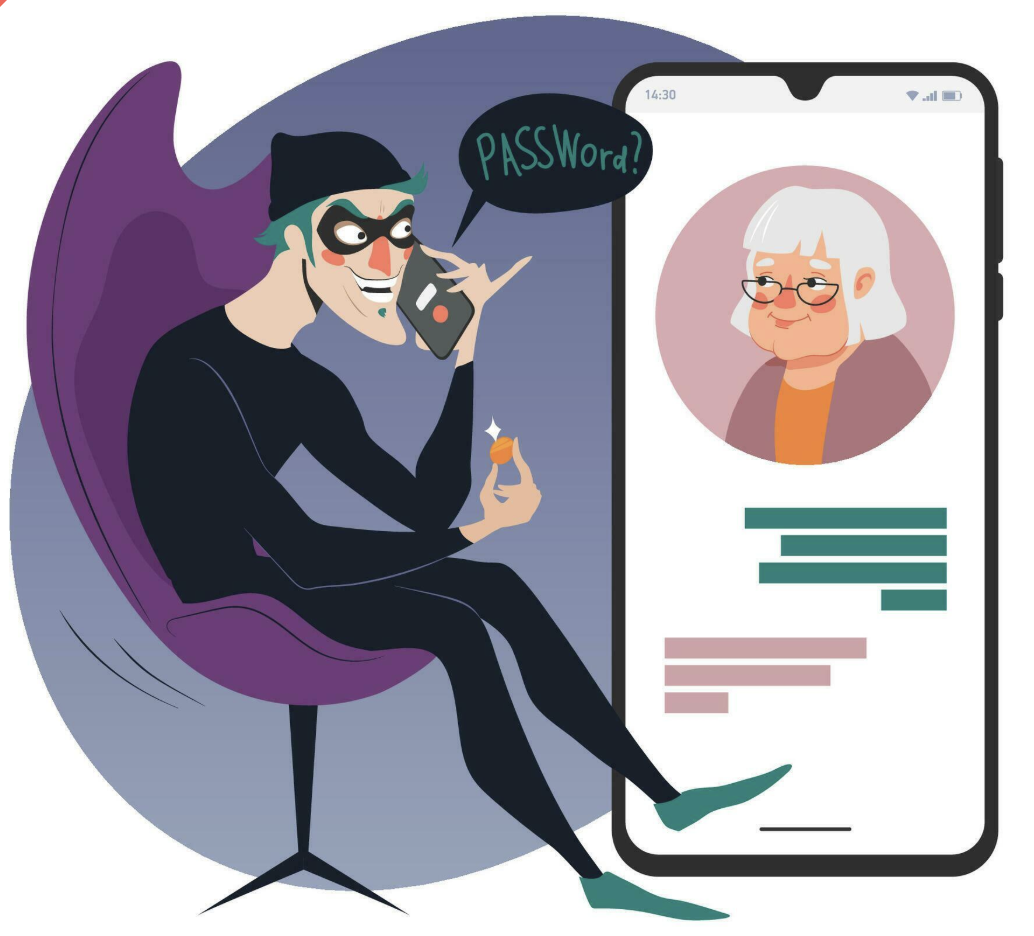
- Anyone who overpays you and asks you to send back the difference is running a scam. The check they sent is fake. The bank will take the full amount back — from you.
- Money "showing" in your account isn't money you can trust yet. The FTC says banks must release check funds quickly by law, but spotting a fake check can take weeks.
- According to the FTC, anyone who demands payment by gift card is always a scammer. Gift cards are for gifts, not payments.
What's going on?
Person-to-person selling is booming. In our community, people list cars, rooms for rent, help-wanted ads, and tutoring services — in the paper, on classified sites, on Facebook.
Scammers work those same channels. And they work both ends of every listing.
On one end sits the fake listing: a room for rent that doesn't exist, a car advertised with someone else's photos. The victims are buyers and renters.
The other end surprises people: the fake customer. The "buyer" asking about your sofa or the "parent" looking for a tutor may be after the seller's money. Their favorite weapon is a fake check.
The FTC (Federal Trade Commission), the federal consumer-protection agency, tracks both. Its numbers show this is not a small problem. Here's how the two cons work, six red flags that expose them, and what to do if you've already paid.
Con number one — the fake listing: you lose money before you ever see the place
Start with the familiar end: buyers and renters. Rental fraud is the most-reported example.
According to the FTC, people filed nearly 65,000 rental-scam reports from 2020 through mid-2025, with about $65 million in losses — a median of $1,000 per victim. The FTC notes most scams are never reported, so the real harm is far larger.
Here's the mechanics. Scammers copy a real rental listing, swap in their own contact information, and post it on a different site. Many would-be renters discover the home they "rented" was actually listed for sale, not for rent. Others build fake listings from scratch: attractive photos, rent well below the going rate.
Where do these ads live? In the 12 months ending June 2025, the FTC says about half of reported rental scams started with a fake ad on Facebook. Another 16 percent started on Craigslist.
The endgame is always one of two things. Money — an application fee, security deposit, or first month's rent demanded before you've seen the place. Or your identity — a Social Security number and a photo of your driver's license, collected on a fake "application."
Con number two — the overpayment scam: when "money in your account" isn't real yet
Now for the end fewer people see coming: the person who posted the ad gets robbed. The weapon of choice is a fake check, in what's known as the overpayment scam.
It runs in four steps:
Step 1. The "buyer" agrees fast — no haggling, often no need to see the item. Then a check arrives for far more than the agreed price.
Step 2. They have a smooth explanation. They wrote it wrong. Could you kindly forward the extra to their mover, or the person driving their child to lessons?
Step 3. You deposit the check. A day or two later, the money shows up in your account. Believing it's real, you send the "extra" back — by Zelle, bank transfer, or gift cards.
Step 4. Weeks later, the bank discovers the check is fake and claws the full amount back out of your account. According to the FTC, you're the one stuck repaying the bank. The money you forwarded is gone.
The trap is Step 3. The FTC explains that federal law requires banks to make deposited check funds available quickly — often within days. But "available" doesn't mean "good." The FTC says fake checks now look real enough to fool bank employees, and uncovering one can take weeks. That gap between "days" and "weeks" is the scammer's payday.
Which is why the FTC's advice belongs on your refrigerator: never accept a check for more than the selling price — you can bet it's a scam.
Six red flags — any one of them means stop
Knowing two specific cons helps. But scammers rewrite their scripts constantly; what changes far less are the warning signs. These six come from FTC guidance. Hit any one of them, and pause the deal.
1. They overpay and ask you to send back the difference. According to the FTC, this is always a scam — no matter how reasonable the story sounds.
2. They demand payment by gift card, wire transfer, or cryptocurrency. The FTC says anyone who demands payment by gift card is always a scammer. All three methods share one trait: once sent, the money is nearly impossible to get back. It's like handing cash to a stranger.
3. They rush you. "Decide today or someone else gets it." Honest buyers and sellers give you time to think. Scammers are afraid of what happens when you do.
4. They want money before you've seen anything in person. Holding fees, deposits, application fees — demanded before a showing. The rule: see it with your own eyes before a dollar moves.
5. The price is way off the market. A room renting far below the going rate is classic bait. The reverse is suspicious too: a "buyer" who's oddly generous, buys sight unseen, never haggles.
6. They won't meet, and they ask for personal documents too soon. The FTC notes rental scammers usually avoid meeting in person. And your Social Security number, driver's license photo, or credit-score screenshots? A legitimate landlord doesn't need those before you've agreed to rent. An identity thief very much does.
Already paid? Move fast
Spotting red flags is prevention. If money has already left your hands, speed decides what you can recover — every payment method has a recovery window, and it shrinks by the hour.
Deposited a stranger's check: call your bank immediately, before sending any money out.
Paid with a gift card: call the card issuer (the number is on the back). Say the card was used in a scam and ask for a refund. Tell the store that sold it, too.
Sent a wire transfer: call right away and ask them to reverse it.
MoneyGram: 1-800-666-3947
Western Union: 1-800-325-6000
Mailed a money order: call the U.S. Postal Inspection Service: 877-876-2455
Report it at ReportFraud.ftc.gov, the FTC's fraud-reporting site. If the scam happened online, also file at ic3.gov — the FBI's internet-crime complaint site. Reports help investigators connect the dots, and help the next person avoid the trap.
Bigger than one bad check
These cons spare no one. The FTC found adults 18 to 29 were three times more likely than older adults to lose money to a rental scam. This isn't a "trusting elders" problem — the kids and grandkids need this article, too.
Buying and selling within our community runs on trust. Scammers are parasites on exactly that trust. In the end, sellers and buyers share a single weapon: spot the signs before the crook makes a move — and tell the person next to you.
lừa đảo → scam, fraud
Trả dư tiền rồi nhờ chuyển lại — đó là lừa đảo. (Overpaying and asking for money back — that's a scam.)
tiền cọc → security deposit
Đừng đưa tiền cọc khi chưa xem nhà. (Don't pay a deposit before seeing the home.)
mặc cả → to haggle, to bargain
Khách mua thật thường mặc cả; kẻ lừa đảo thì không. (Real buyers usually haggle; scammers don't.)
dấu hiệu → warning sign
Gặp một dấu hiệu là dừng lại. (One warning sign is enough to stop.)
mồi nhử → bait
Giá rẻ bất thường là mồi nhử kinh điển. (An unusually low price is classic bait.)
kẻ gian → crook, bad actor
Kẻ gian chép tin thật rồi thay số điện thoại. (Crooks copy real listings and swap the phone number.)
trình báo → to report (to authorities)
Bị lừa thì trình báo tại ReportFraud.ftc.gov. (If you're scammed, report it at ReportFraud.ftc.gov.)
lòng tin → trust
Kẻ lừa đảo sống ký sinh trên lòng tin của cộng đồng. (Scammers are parasites on the community's trust.)
🧩 Play Cầu Chữ — the daily word game from Bolsa Bridge, built from vocabulary boxes like this one →
This article is for general information only and is not financial, tax, investment, or legal advice. Please consult a licensed professional before making decisions.
Sources & verification notes · 2 sources
- FTC — "How To Spot, Avoid, and Report Fake Check Scams" (updated June 2025): how fake checks and overpayment scams work, funds-availability rules, gift-card guidance, and recovery phone numbers. https://consumer.ftc.gov/articles/how-spot-avoid-and-report-fake-check-scams
- FTC Data Spotlight — "Rental scams hit home with $65 million in reported losses" (December 22, 2025): 65,000 reports and $65 million since 2020, $1,000 median loss, Facebook/Craigslist shares, the 18–29 age finding, and how listings get cloned. https://www.ftc.gov/news-events/data-visualizations/data-spotlight/2025/12/rental-scams-hit-home-65-million-reported-losses