Local Government
Fountain Valley's $540,000 backup-ambulance proposal: what would it mean for your bill?
The Fountain Valley City Council is scheduled to consider a backup-ambulance contract on November 3, 2026. The proposed spending cap is $540,000, but a separate reduction in billing-service fees would not mean lower patient bills.
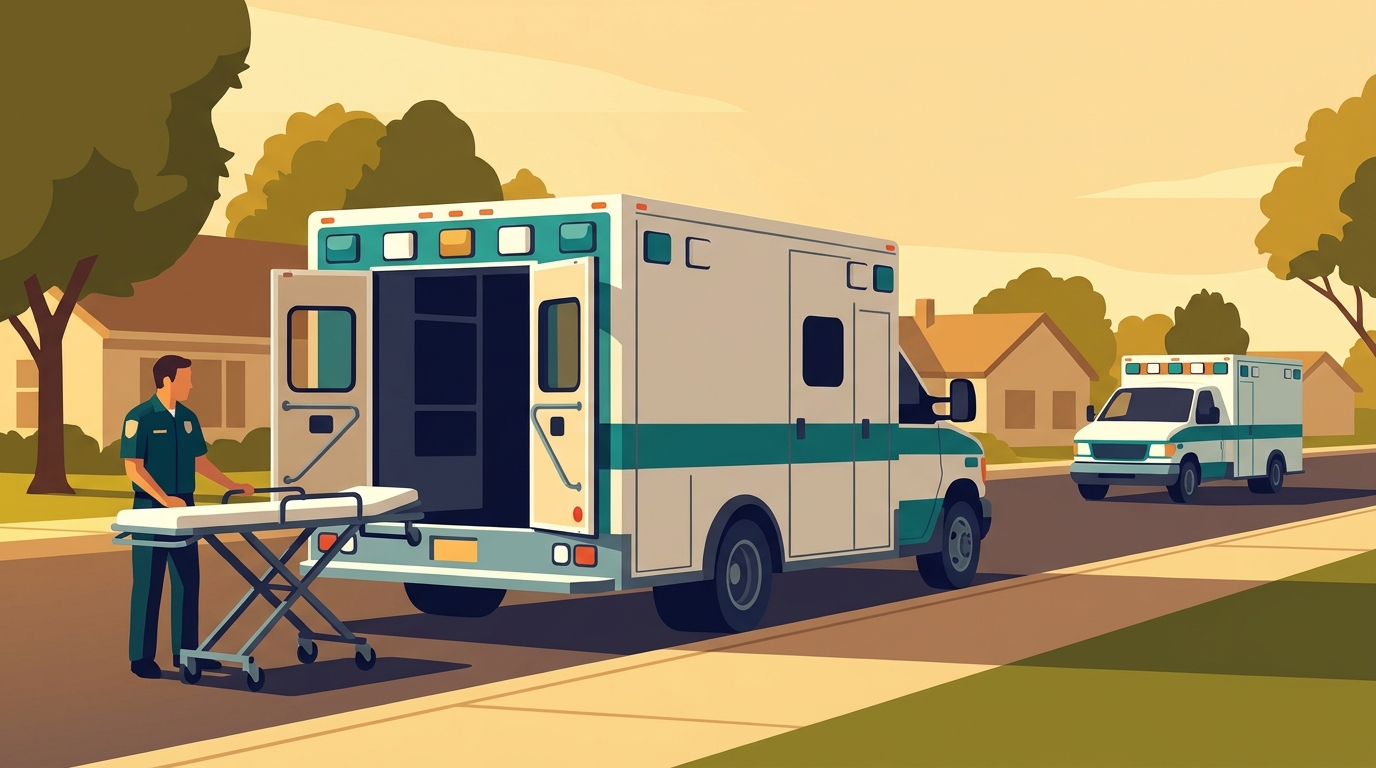
- Fountain Valley is proposing a new backup-ambulance contract. The initial term would run from December 1, 2026, through December 31, 2029, with a $540,000 spending cap.
- Under the proposal, the ambulance company could not bill patients, insurers or other third parties directly. The city would pay the contractor, but that does not establish that the ride would be free.
- The city also proposes cutting Wittman's collection fee from 4.25% to 3.75% of net collections. The reports do not separately explain how patients would be billed for rides provided by the backup contractor.
Why does Fountain Valley need backup ambulances?
The Fountain Valley City Council is scheduled to consider two ambulance-related contracts on November 3, 2026. The meeting begins at 6 p.m. in the Council Chambers at 10200 Slater Avenue.
According to the staff report, the Fire Department responds to about 8,500 emergency calls a year, roughly 85% of them medical emergencies.
When the city's on-duty ambulances are all busy, a backup vehicle — called a surge ambulance — can provide transportation for a patient.
The report says the contractor responds only when activated; it does not send itself to a scene. Backup vehicles may be needed during simultaneous calls, incidents with multiple patients, periods when city ambulances are out of service or declared emergencies.
From September 2025 through August 2026, the Fire Department requested surge ambulances 1,013 times. The report records 678 patient transports.
A spending limit, not a guaranteed number of trips
To have transportation available when needed, the city proposes hiring Emergency Ambulance Service, Inc. The company would provide Basic Life Support, or BLS, transportation.
City firefighter-paramedics would continue providing Advanced Life Support, or ALS, the higher level of emergency medical care. They could accompany a patient to the hospital.
The proposed initial term would begin December 1, 2026, and end December 31, 2029. The spending cap would be $540,000.
There would be no guaranteed minimum number of trips. Costs would depend on actual use. The city could choose up to two additional one-year extensions, subject to funding approval.
A second city ambulance is expected to operate around the clock starting December 1, 2026. Staff estimates that this would reduce demand for hired backup vehicles by about 33%.
At the previous level of use, the report estimates annual costs of about $269,000. With the projected 33% reduction, that estimate falls to about $180,000 a year.
These are staff projections, not confirmed savings.
Eight providers downloaded the bid documents, but only Emergency Ambulance Service submitted a proposal.
Some providers contacted by the city said low call volume would make it difficult to keep vehicles positioned nearby. They also cited response-time requirements and other operating conditions.
Staff says it compared the proposed rates with historical use, county-permitted maximums and ambulance contracts in nearby cities.
Who pays for the ride — and could a patient receive a bill?
The contract cap limits what the city would pay the contractor. It does not fully answer the question of patient bills.
Under the proposal, the city would be the sole payor for the backup provider. Emergency Ambulance could not bill patients, insurers or other third parties directly.
Agenda item 8 separately proposes retaining Wittman Enterprises to collect payments from insurers and other payers.
That report describes patients who are not enrolled in the city's membership program. They could receive a bill if an unpaid balance remains after insurance payments.
Neither report separately explains how city billing would apply to a ride provided by Emergency Ambulance. A ban on direct billing by the contractor is not enough to establish that the ride would be free.
The city's fountainvalley.gov website describes its Paramedic Membership Program. Household membership costs $60 a year.
According to that page, insurance is billed for emergency 9-1-1 medical care and ambulance transportation. Members do not have to pay the balance remaining after insurance pays.
Members who are uninsured at the time of an emergency receive a 20% discount on the total bill. The city says that discount is not available to nonmembers.
The page also says the city accepts Medi-Cal payments as payment in full. People with Medi-Cal do not need membership unless they want coverage for others in their household.
The program page does not separately explain how these provisions apply to a ride provided by the contractor. Residents can ask the Fire Department about eligibility, how the program applies and enrollment.
Paramedic Membership Program — Fountain Valley Fire Department:
(714) 593-4436
Email: pmmember@fountainvalley.gov
Website: fountainvalley.gov
Program information: Paramedic Membership Program.
A separate proposal would lower the city's collection fee
Alongside the backup-ambulance contract, the council will consider what the city pays its billing company.
The proposed Wittman agreement would last six years, starting December 1, 2026, with no extensions.
The city currently pays Wittman 4.25% of net collections. The proposal would lower that fee to 3.75%.
Based on the previous year's billing costs, staff estimates annual savings of about $24,000. The six-year contract cap would be $1.2 million.
Those savings would go to the city. They are not a reduction in what patients pay for ambulance service.
The report says residents would see no change in how they are billed. Both proposals still require a council vote.
Want to comment?
Residents can watch or comment at the regular meeting at 6 p.m. on Tuesday, November 3, 2026, in the Council Chambers at 10200 Slater Avenue, Fountain Valley.
To speak in person, submit a speaker card to the City Clerk — the office that collects the cards — before the public-comment period begins.
Indicate whether you want to address item 7 or item 8. Each speaker has up to three minutes. The agenda says late requests require the chair's permission.
The agenda does not list a separate email address or deadline for written comments. Contact the City Clerk to confirm how and when to submit them.
City Clerk — questions about submitting comments:
(714) 593-4445
The meeting will be streamed on the City of Fountain Valley YouTube channel. Review the official agenda before attending.
The council will decide whether to approve the two contracts. Keeping a vehicle available to transport a patient and deciding how to bill for that trip are separate questions. The city's billing process for contractor-provided rides still needs clarification.
xe cứu thương dự phòng → surge ambulance; backup ambulance
Thành phố đề nghị thuê xe cứu thương dự phòng. — The city proposes hiring backup ambulances.
hỗ trợ sinh tồn cơ bản → Basic Life Support (BLS)
Nhà cung cấp làm dịch vụ hỗ trợ sinh tồn cơ bản. — The provider supplies Basic Life Support services.
chăm sóc cấp cứu nâng cao → Advanced Life Support (ALS)
Nhân viên cấp cứu thành phố phụ trách chăm sóc cấp cứu nâng cao. — City paramedics provide Advanced Life Support care.
mức chi tối đa → spending cap
Thành phố đề nghị mức chi tối đa $540.000. — The city proposes a $540,000 spending cap.
số tiền thu ròng → net collections
Thành phố hiện trả Wittman 4,25% số tiền thu ròng. — The city currently pays Wittman 4.25% of net collections.
khoản chưa thanh toán → unpaid balance
Báo cáo nêu khoản chưa thanh toán sau khi bảo hiểm trả. — The report describes an unpaid balance after insurance pays.
thẻ phát biểu → speaker card
Quý vị cần nộp thẻ phát biểu trước phần góp ý. — You need to submit a speaker card before the comment period.
🧩 Play Cầu Chữ — the daily word game from Bolsa Bridge, built from vocabulary boxes like this one →
This article is for general information only and is not financial, tax, investment, or legal advice. Please consult a licensed professional before making decisions.
Sources & verification notes · 4 sources
- Fountain Valley — Surge BLS Ambulance Services Agreement, item 7 on the November 3, 2026, agenda. Official PDF: https://www.fountainvalley.gov/AgendaCenter/ViewFile/Agenda/_11032026-1083, staff report pages 1–4, corresponding to PDF pages 154–157. English-language source, reviewed October 28, 2026. Covers the proposed term, cap, service use, cost projections, procurement and payment by the city to the provider. It is a proposal, not an approved action.
- Fountain Valley — Ambulance and Paramedic Billing and Collection Services, item 8 on the same agenda. Official PDF: https://www.fountainvalley.gov/AgendaCenter/ViewFile/Agenda/_11032026-1083, staff report pages 1–4, corresponding to PDF pages 237–240. English-language source, reviewed October 28, 2026. Covers Wittman's fee, contract cap, projected savings and the conditions under which patients could receive a bill. The two reports do not separately explain billing for contractor-provided rides.
- Fountain Valley Fire Department — Paramedic Membership Program. Official program page: https://www.fountainvalley.gov/1366/Paramedic-Membership-Program, with program highlights dated August 2026; rechecked October 28, 2026. English-language source. Describes the $60 annual household fee, balances after insurance payments, a 20% discount for uninsured members and the Medi-Cal exception. It does not separately address the backup contractor's rides.
- Fountain Valley Fire Department — Emergency Medical Services. Official page: https://www.fountainvalley.gov/257/Emergency-Medical-Services, reviewed October 28, 2026. English-language source describing ALS services and the 85% medical-response share. Meeting logistics, speaker-card rules, the City Clerk's phone number and the YouTube channel come from the opening two pages of the packet in source 1.