Local Government
What AB 1572’s nonfunctional-turf rules could mean for you
The Garden Grove City Council approved the first reading of a draft local update tied to California’s AB 1572 on October 13, 2026. State law sets different deadlines for public property, businesses and shared residential areas; not every lawn is covered.
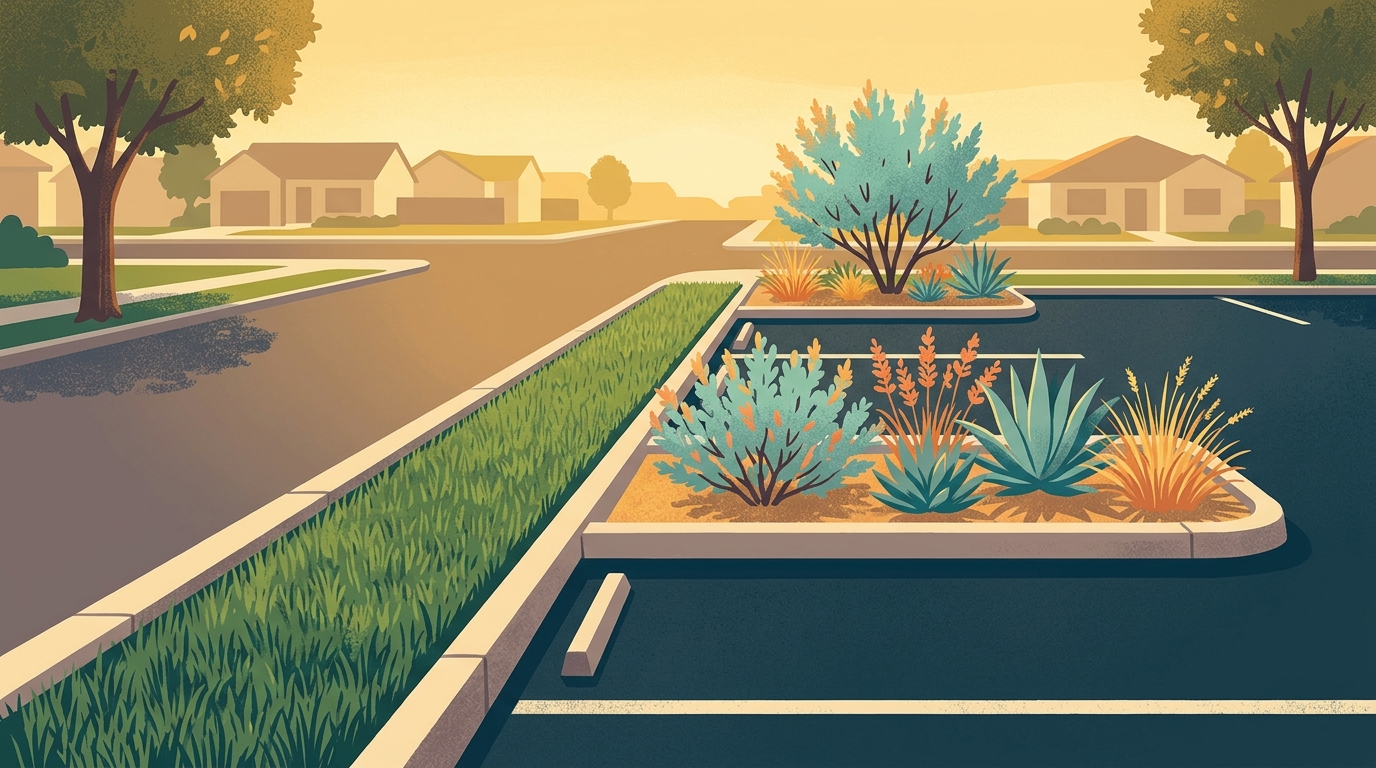
- The Garden Grove City Council approved the draft ordinance’s first reading on October 13, 2026. The proposed local rules are not yet in effect.
- The law targets turf that serves no recreational or community purpose. Decorative roadside strips and parking-lot islands are examples in the city report.
- Commercial, industrial and school sites have a January 1, 2028 deadline. Sports fields, playgrounds and turf used for community activities are among the exemptions described in the report.
The draft passed its first reading
On October 13, 2026, the Garden Grove City Council considered a draft ordinance revising two sections of Title 14. The proposal would add California’s AB 1572 requirements to the city code.
The state law limits the use of treated potable water to irrigate certain turf that serves no function. It requires public water suppliers to update their rules by January 1, 2027. Garden Grove is among the local agencies subject to that deadline.
Automatic captions for the meeting recording report six yes votes on the first-reading motion. We have not independently checked the tally against the audio.
Passing a first reading does not put the local code change into effect. The city must complete the next required steps before the amendment becomes effective.
Neither the public packet nor the recording reviewed identifies a date for the next reading.
What counts as nonfunctional turf?
The term does not cover every lawn. Garden Grove’s staff report describes nonfunctional turf as grass that does not serve a recreational or community purpose.
Examples include decorative strips between roads, grass islands in parking lots and fenced-off turf the public cannot use. The rule concerns treated potable water used to irrigate those areas—not every source of irrigation water.
The city report lists exemptions such as sports fields, playgrounds, golf courses, picnic areas and places where the public gathers. Water needed to sustain trees and perennial plants other than turf is also protected. Cemeteries and emergencies involving health or safety are exempt as well.
Different sites have different deadlines
The first deadline, January 1, 2027, applies to state and local government property and public agencies. Garden Grove’s report says 10 of the city’s 70 medians still have turf. The city expects to stop irrigating covered turf before the deadline.
Replacing turf with plants or other landscaping is optional. The city report says conversion may happen over several fiscal years, depending on funding and construction schedules.
Commercial, industrial and institutional sites such as schools have a January 1, 2028 deadline. Common areas in homeowners associations and common-interest developments have a January 1, 2029 deadline. Some public property in disadvantaged communities may have until 2031 or later, depending on state assistance.
Property owners may seek an extension of up to three years if they meet the law’s conditions, including qualifying economic hardship or health and safety concerns. The report says affected customers will be notified on the schedule set by law.
What should business owners distinguish?
The 2028 deadline does not mean every lawn at a shop, office or school must be removed. The key questions are whether the turf serves a recreational or community purpose and whether treated potable water is used for irrigation.
The city report explains the law’s scope and deadlines but does not identify every privately owned lawn in Garden Grove. Business owners can watch for notices from their water supplier before deciding whether to change landscaping.
The first-reading vote advanced the proposal, but the local rules are not yet in effect. The City Council decides the next local steps, while state law continues to set the broader deadlines.
dự thảo → draft proposal
Hội đồng xem xét một dự thảo sửa bộ luật.
dải phân cách → median; divider strip
Thành phố còn 10 dải phân cách có cỏ.
nước uống đã xử lý → treated potable water
Luật điều chỉnh việc dùng nước uống đã xử lý để tưới cỏ.
trường hợp được miễn → exemption
Sân thể thao thuộc nhóm trường hợp được miễn.
gia hạn → extension
Chủ sở hữu có thể xin gia hạn nếu đủ điều kiện.
🧩 Play Cầu Chữ — the daily word game from Bolsa Bridge, built from vocabulary boxes like this one →
Sources & verification notes · 3 sources
- English-language source; Item 426/2026 and staff report, packet PDF pages 455–458. This packet explains the draft; the vote outcome is separately sourced to the meeting recording.
- English-language source; Garden Grove City Council recording from October 13, 2026. Automatic captions report six yes votes on the first reading; the tally has not been checked against the audio. https://www.youtube.com/watch?v=RlTYstDqAyg&t=7320s
- Official English-language statute concerning irrigation of nonfunctional turf with treated potable water.