Safety · Scam Alert
A caller sounds human—but could be AI. How should you verify the call?
The FCC treats AI-generated voices as artificial voices under its calling rules, but that is not a ban on every use of the technology. When an unexpected caller demands money or personal information, the agency advises hanging up and calling an official number yourself.
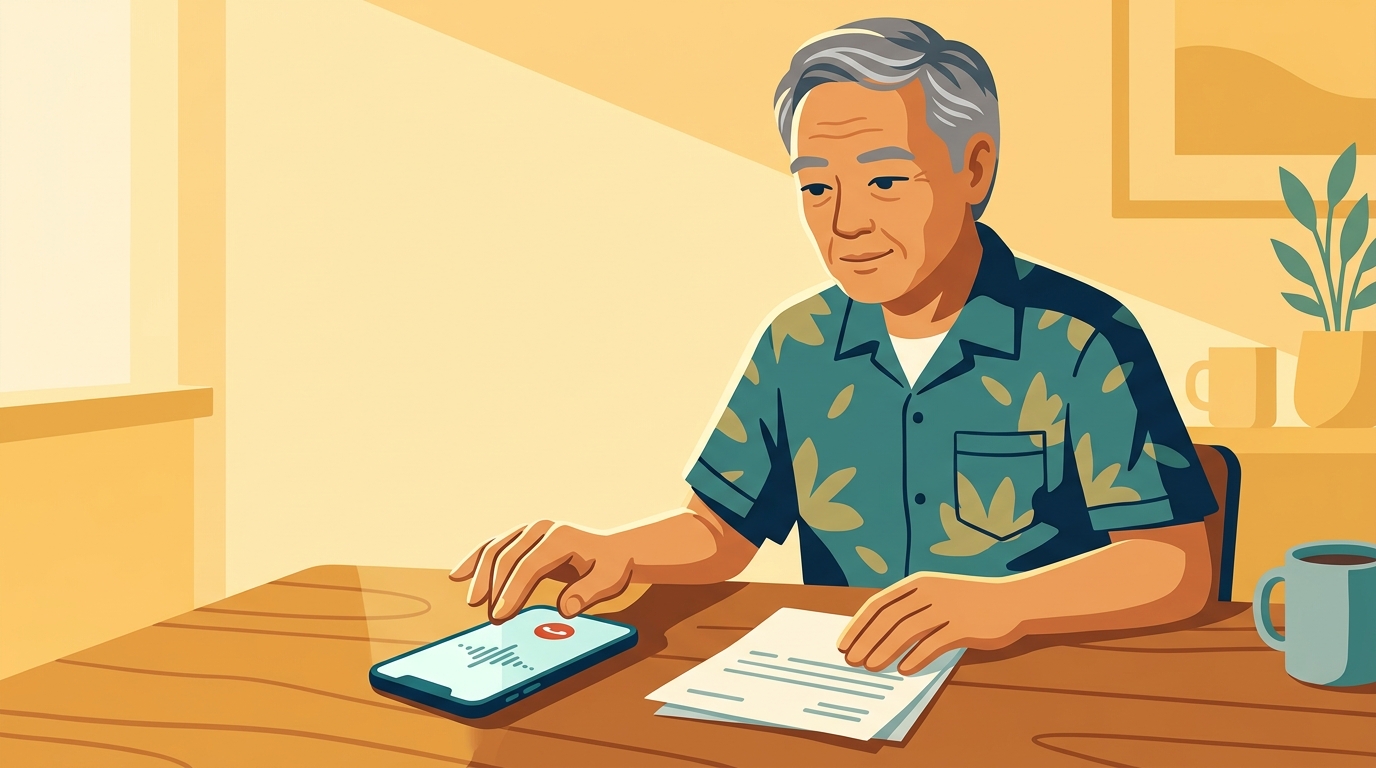
- An AI voice does not prove a call is genuine or legal. The FCC applies artificial-voice rules to AI voices; consent requirements and exemptions matter.
- Do not give an unexpected caller money or personal information. Hang up and contact the business or agency using its official website or documents you already have.
- You can report unwanted calls or texts. The FCC receives unwanted-call and text complaints. The FTC receives scam reports and reports of Do Not Call violations.
What is a robocall?
A school closure notice, a recorded sales pitch and someone impersonating a bank can all arrive by phone. But they do not have the same purpose or fall under the same rules.
The Federal Communications Commission, the U.S. telecommunications regulator, describes robocalls as calls made with an autodialer or a prerecorded or artificial voice. An artificial voice can be generated by AI and sound like a real person. It does not have to be a recording made in advance.
In a ruling released on February 8, 2024, the FCC confirmed that AI voices fall within artificial-voice restrictions under the Telephone Consumer Protection Act, or TCPA. This federal law protects consumers from certain unwanted calls.
The FCC's consumer guide, reviewed on February 27, 2026, continues to explain that rule. This is not a new ban issued in October 2026. It is nationwide guidance, not a report of a specific incident in Little Saigon.
When is consent required?
According to the FCC, AI-voice calls covered by the TCPA require prior consent unless they have an emergency purpose or qualify for an exemption. For advertising or telemarketing calls, its 2024 ruling specifies prior express written consent.
The difference between a mobile number and a home landline also matters. The FCC's guide says certain survey calls and calls on behalf of tax-exempt nonprofits are permitted to landlines. School closure notices and flight information calls can also be permitted to landlines.
The FCC also describes an exception for emergency calls about danger to life, safety or property. These examples do not mean a caller qualifies just by claiming something is an emergency.
Hearing a machine-like voice is therefore not enough to determine that a particular call is illegal. A natural-sounding voice does not verify the caller, either. Families should separate checking identity from evaluating the legal rules.
If the caller asks for money or information
The FCC advises hanging up if a caller pressures you, demands money or asks for personal information. If they claim to represent a bank, business or government agency, find its official number on your card, statement or its website and call it yourself.
According to the FCC, caller ID—the name or number displayed on your screen—can be spoofed. A familiar-looking number does not verify who is calling.
For example, if someone claims to be from your bank and asks for your PIN, hang up. The FCC advises calling the official number on your statement or the bank's website, not a number supplied by the caller.
If a caller tells you to buy gift cards to pay immediately, the FCC identifies that as a scam warning sign. A gift card is not proof that a caller represents an agency or business.
The FCC also suggests asking your phone company about call-blocking tools. Those tools can reduce unwanted calls; verifying through an official number remains important.
Where can you report the call?
You can file an FCC complaint under “unwanted calls.” The agency says it does not resolve individual complaints, but uses reports to monitor trends and inform possible enforcement.
For a suspected scam, the FCC directs consumers to the Federal Trade Commission, the U.S. consumer protection agency. Do Not Call violations can be reported through that program's website.
Reporting routes
Unwanted calls: fcc.gov/complaints.
Suspected scams: ReportFraud.ftc.gov.
Do Not Call violations: donotcall.gov.
The limits of general guidance
Rules differ depending on the type of call, the number receiving it and consent. Someone who needs to determine their legal rights in a specific case needs a professional to review the facts.
For families around Bolsa, the first step does not have to be guessing whether a voice is human or AI. The FCC's guidance puts hanging up and checking an official number before paying or sharing personal information.
This article is for general information only and is not financial, tax, investment, or legal advice. Please consult a licensed professional before making decisions.
Translation assisted by AI and reviewed by an editor.
giọng nhân tạo → artificial voice
Giọng nhân tạo có thể nghe giống người thật.
sự đồng ý trước → prior consent
Quy định có thể yêu cầu sự đồng ý trước.
bằng văn bản → in writing
Một số cuộc gọi cần sự đồng ý bằng văn bản.
được miễn → exempt
Một số loại cuộc gọi được miễn.
giả mạo → impersonate; falsify
Số hiện trên màn hình có thể bị giả mạo.
gác máy → hang up
Hãy gác máy và tự gọi số chính thức.
🧩 Play Cầu Chữ — the daily word game from Bolsa Bridge, built from vocabulary boxes like this one →
This article is for general information only and is not financial, tax, investment, or legal advice. Please consult a licensed professional before making decisions.
Sources & verification notes · 4 sources
- FCC — Stop Unwanted Robocalls and Texts. Consumer guide reviewed February 27, 2026; covers AI voices, consent, examples of exemptions and reporting routes. Original language: English. https://www.fcc.gov/consumers/guides/stop-unwanted-robocalls-and-texts
- FCC 24-17 — Declaratory Ruling. Ruling released February 8, 2024, paragraphs 2–5; confirms that AI voices fall within TCPA artificial-voice restrictions. Original language: English. https://docs.fcc.gov/public/attachments/FCC-24-17A1.txt
- FTC — ReportFraud. Scam-reporting route linked from the FCC guide. Original language: English; a report is not a guarantee of individual case resolution. https://reportfraud.ftc.gov/
- National Do Not Call Registry. Registration and telemarketing-violation reporting route linked from the FCC guide. Original language: English. https://www.donotcall.gov/